
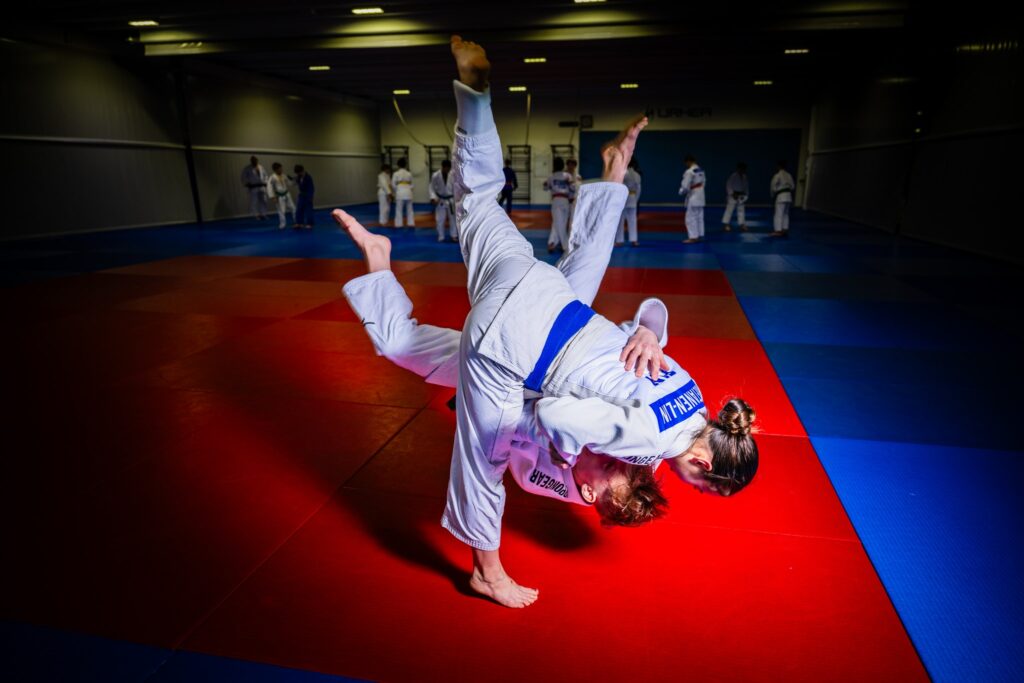
Judo is an Olympic sport
Judo is likely one of the most widespread martial arts in the world – the International Judo Federation includes over 200 member countries!
Judo
Judo is a Japanese martial art and Olympic sport. Jigoro Kano, the founder of judo, developed the discipline from jujutsu in the late 1800s. His goal was to create a sport that would combine physical and mental development and enable safe competition.
The name of the discipline, “ju-do,” means “the gentle/flexible way.” This refers to the fundamental principles of the sport, which involve utilizing the opponent’s strength in movements. Judo’s range of techniques includes throws, holds, chokes, and elbow joint locks.
Judo is likely the most popular martial art in the world. The International Judo Federation comprises 205 countries, and in France alone, which is a major judo nation in Europe, there are estimated to be 600,000 judokas.
Competition has been an important part of judo since the early days of the sport, and today it is possible to progress in competitions all the way to the Olympic level. Judo was first included in the Olympics in 1964; as a permanent sport, it has been part of the Olympics since 1972.
Competing in judo requires good concentration, excellent physical condition, and skillful techniques.
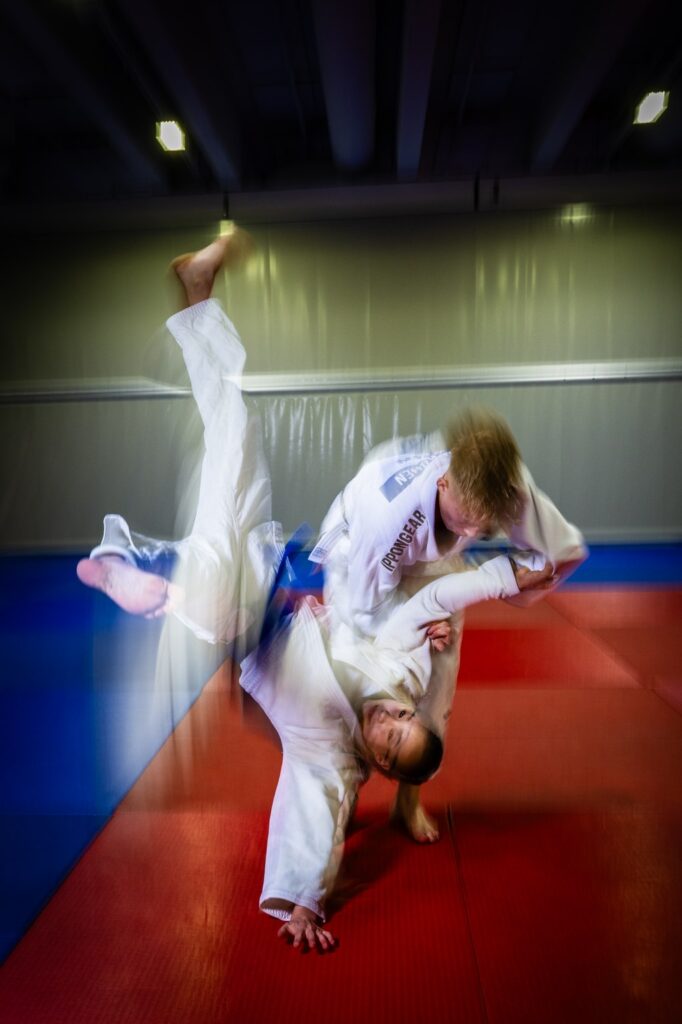
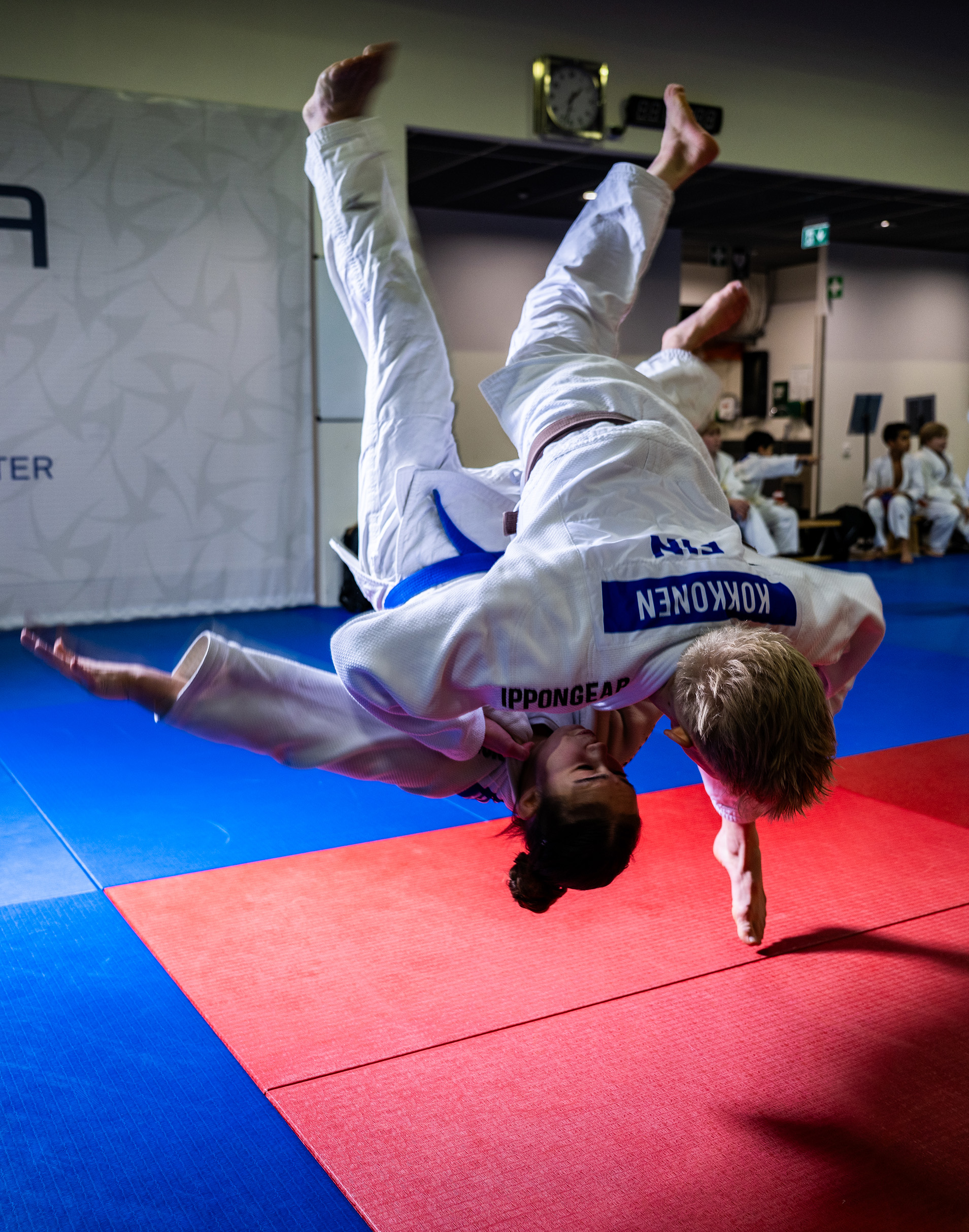
A judo match lasts 4 minutes. If there is a tie at the end of the time, an overtime period is held, which ends only when one of the competitors achieves a score. The match can be won with throws that are rated as worth 5, 7, or 10 points. A throw worth 10 points (ippon) ends the match. The match can also be concluded by holding a pin for 20 seconds or by executing a submission-inducing arm lock or choke. A key principle of a judo match is respect for the other competitor and the referee, and although the fighting is dynamic, judo matches are safe for the participants.
While the Northern Lights Judo Team Finland focuses on supporting and advancing competitors, judo does not always have to be about competition. Judo is also an excellent sport, the practice of which develops physical fitness, endurance, and coordination. Additionally, judo teaches mental growth, such as self-discipline, concentration, and respect for others. As one competes at higher levels, the mental attributes of the sport become more emphasized.
Judo offers the opportunity for versatile exercise and self-improvement for enthusiasts of all ages and fitness levels. There is also a strong community aspect in judo, and many practitioners form lifelong friendships through the sport.
Main image: Carolina’s uchi-mata. Photo: Ossi Pietiläinen, ophotos